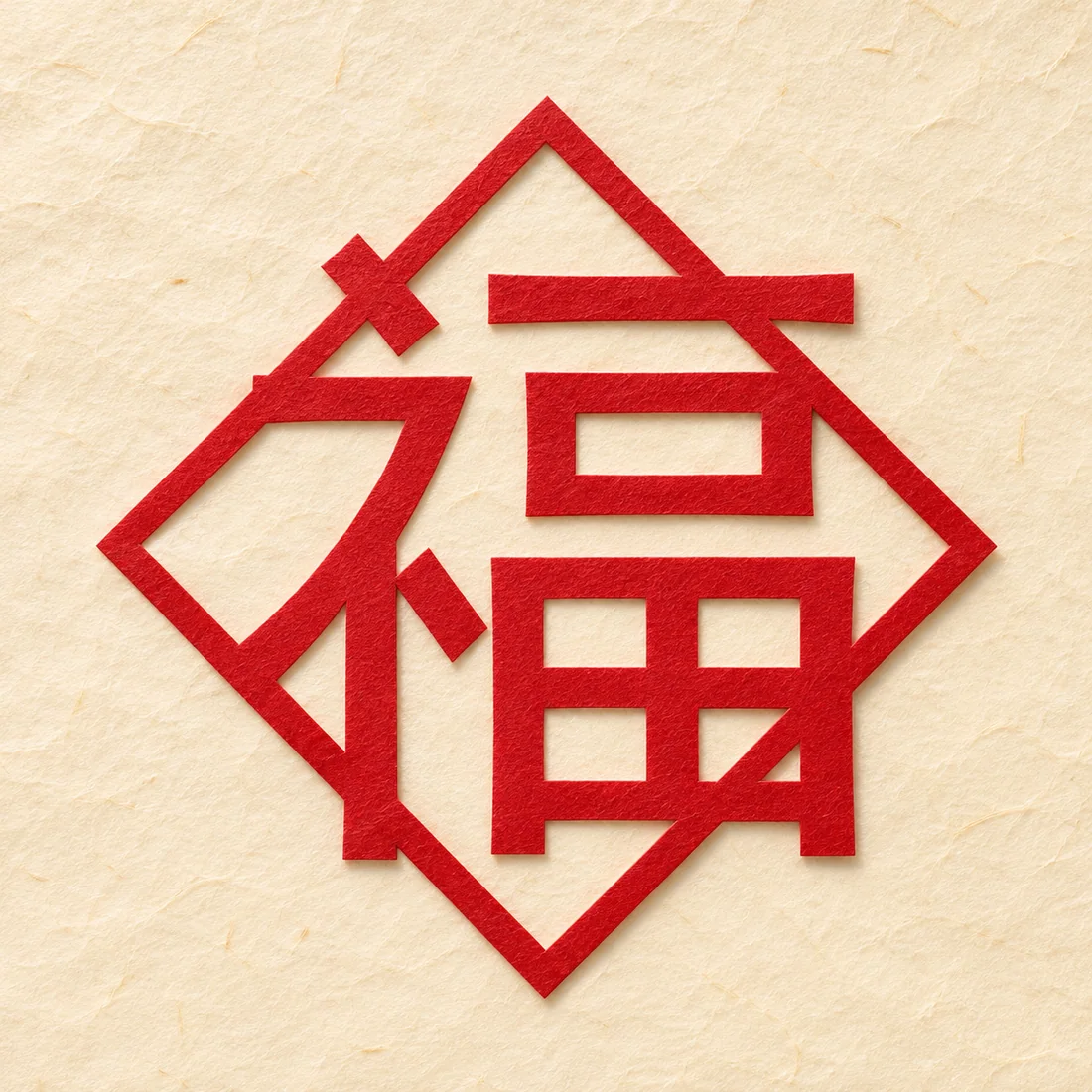
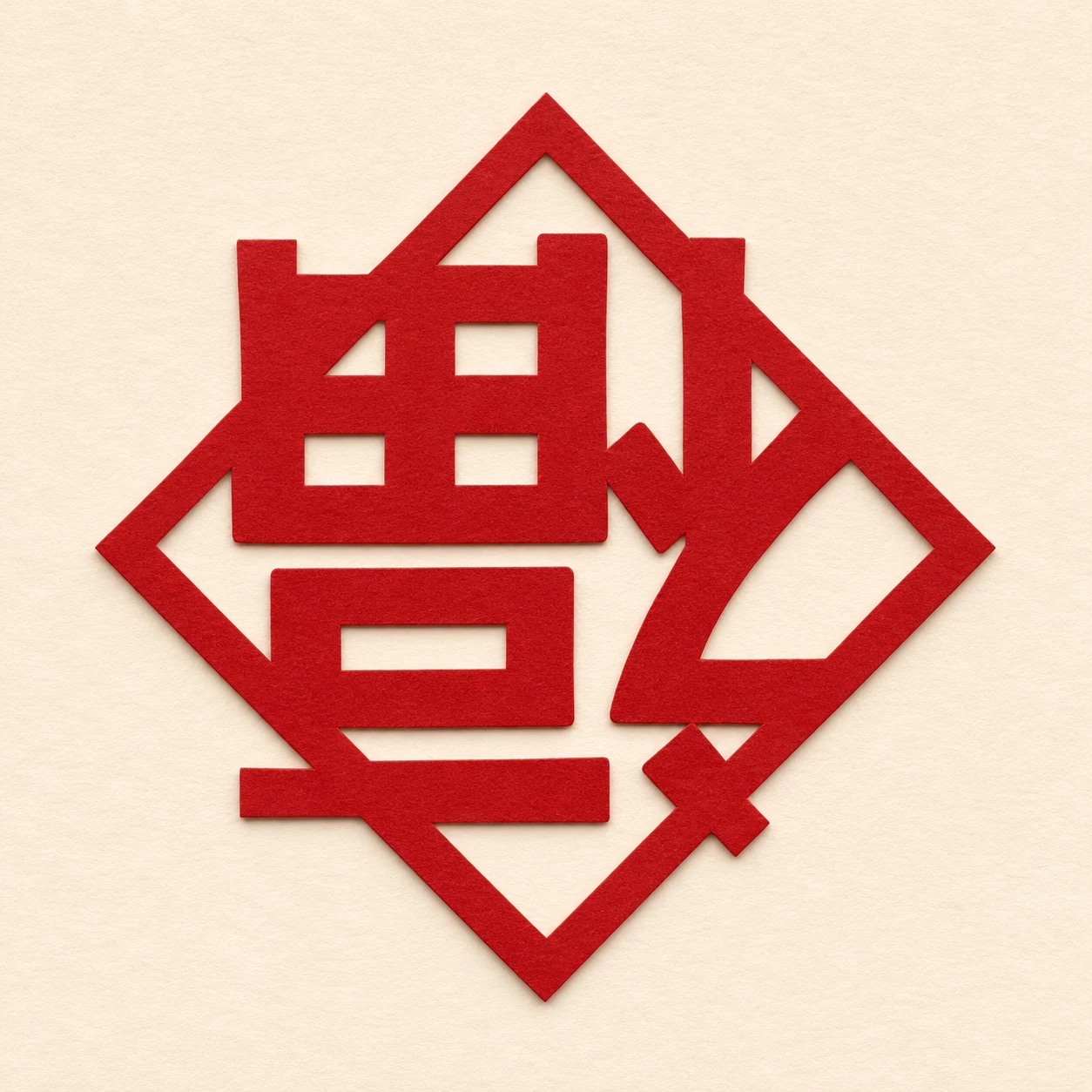
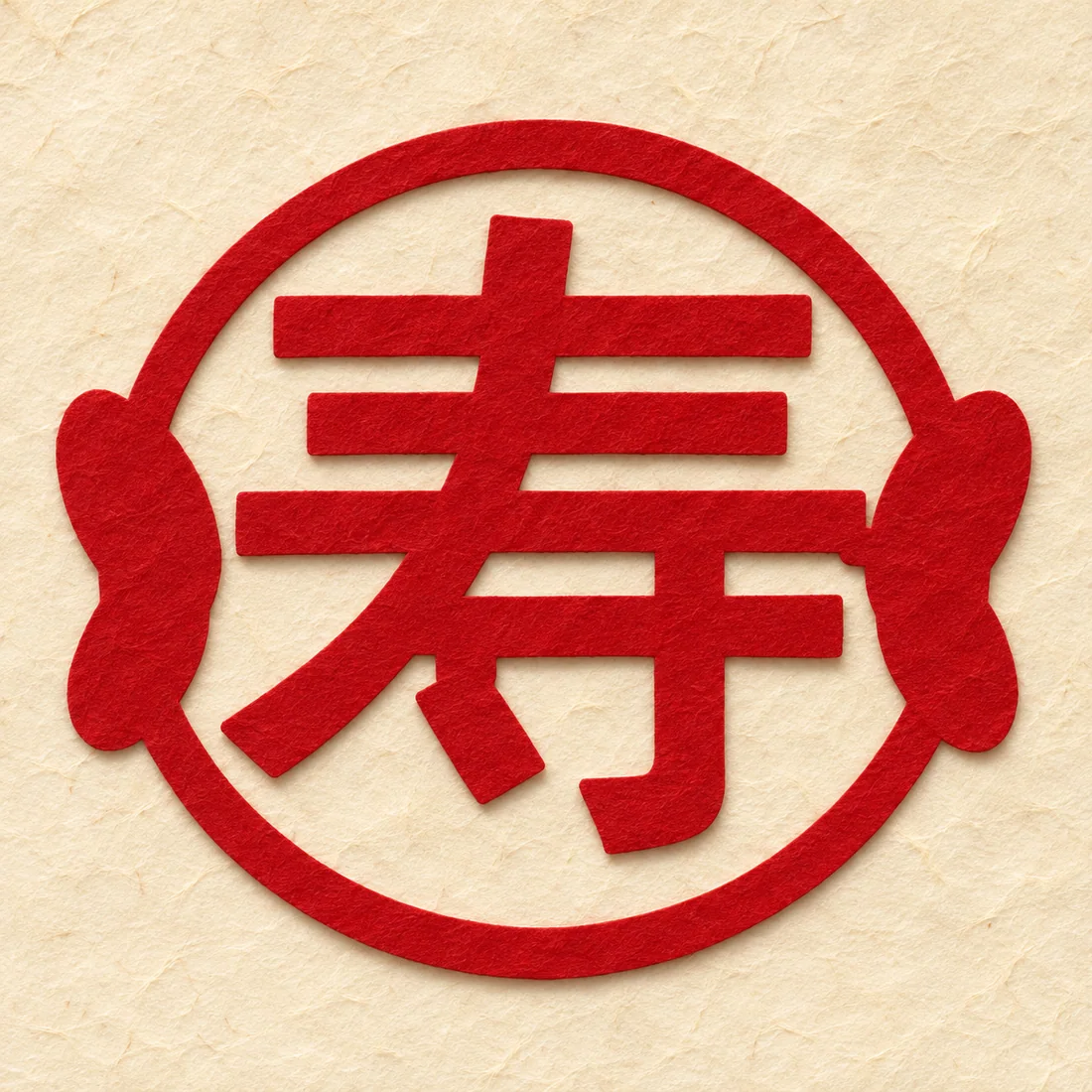
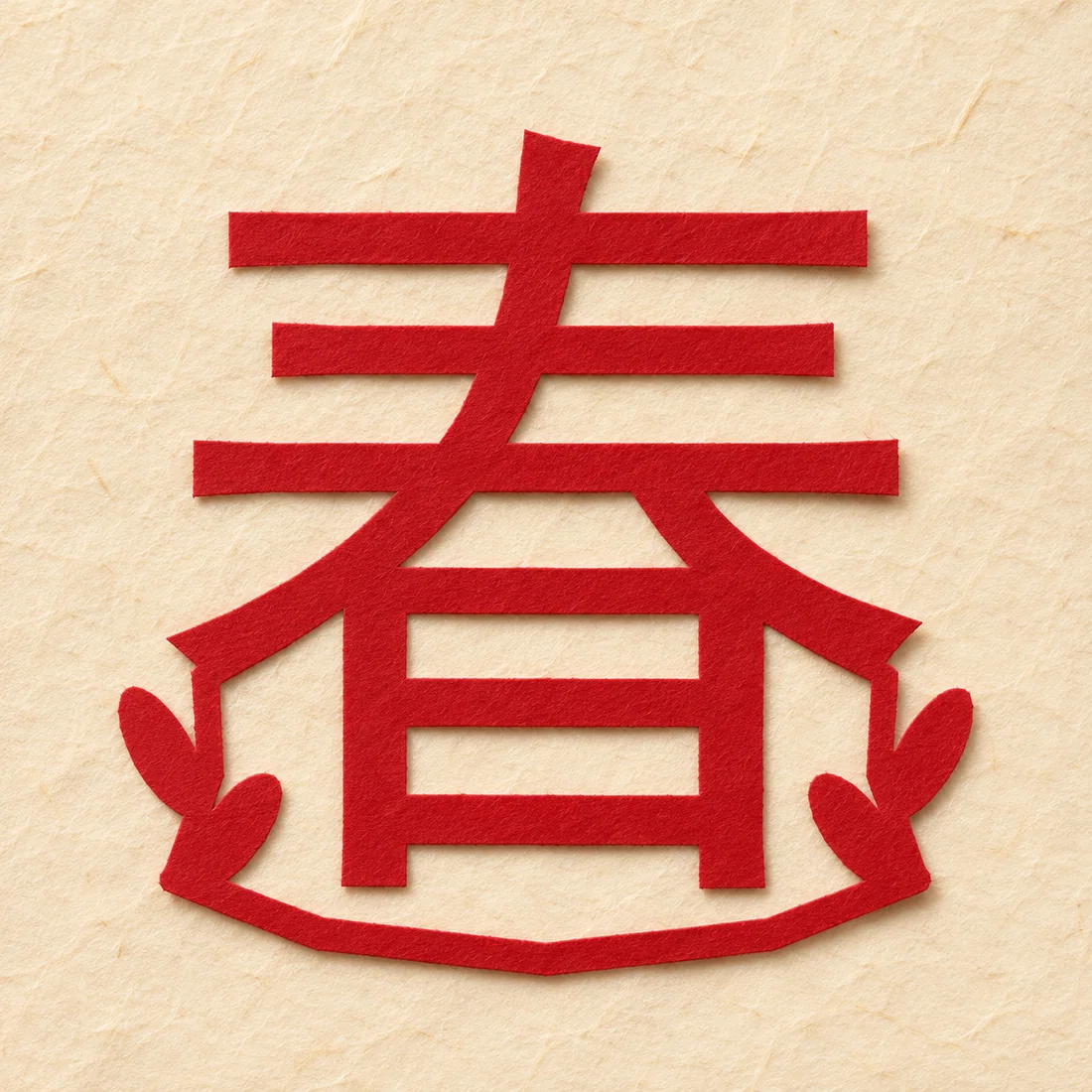
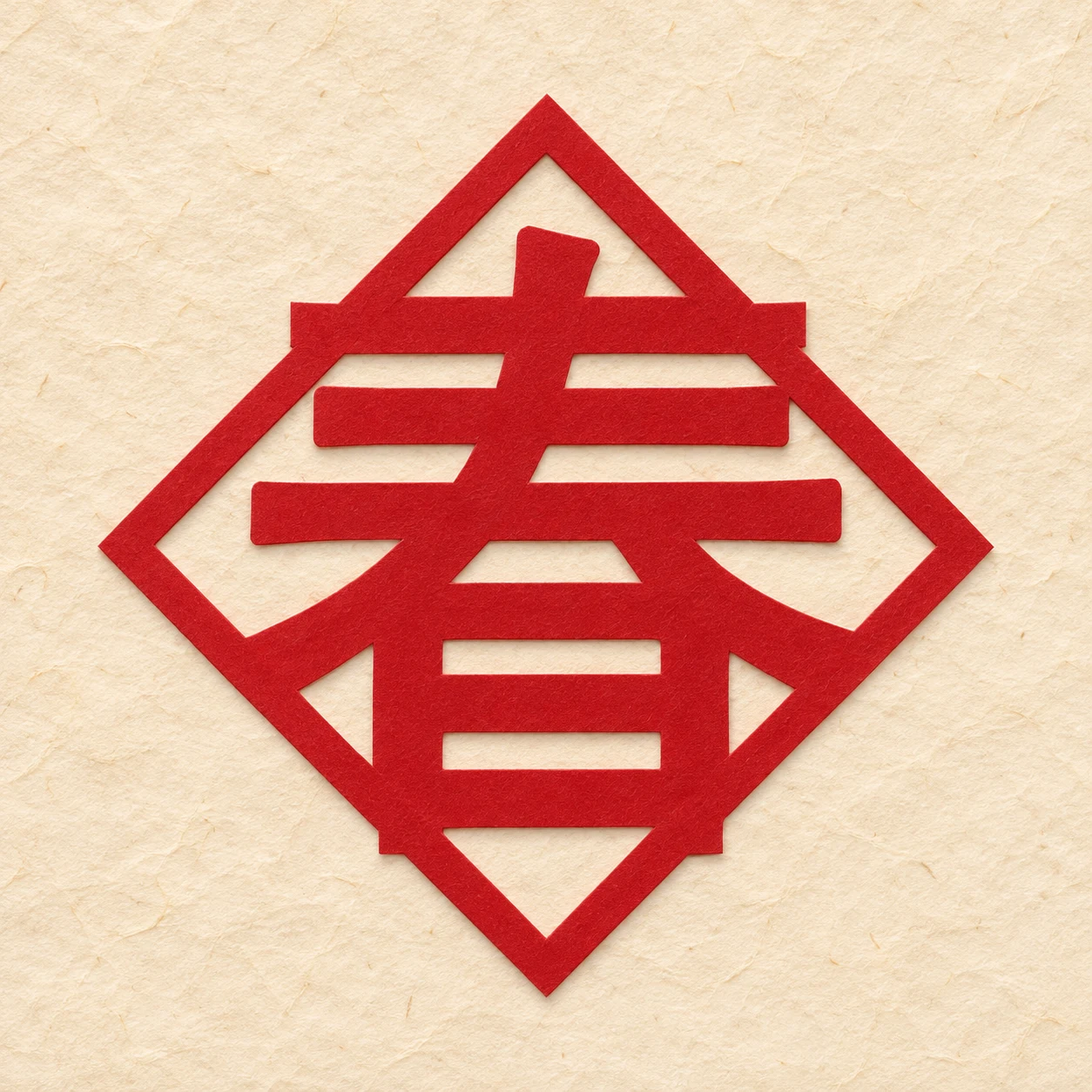
A character papercut needs legible lettering and enough connections between its strokes and decorative frame to hold together. Compare designs for 福, 春, 寿 and 囍, including a clearly titled upside-down 福, and check how each one is meant to be displayed.
The 春 tutorial keeps the character upright. The upside-down 福 has its own tutorial. Both the cutouts and the remaining red strokes are part of the template’s structure. Keep the paper bridges intact as you cut around fine details.
Before you begin
Before tracing, check whether the character is mirrored or upside down. Keep 春 upright.
Cut the enclosed holes inside the character first and the outer contour last. Check the connections between strokes after each group of holes.
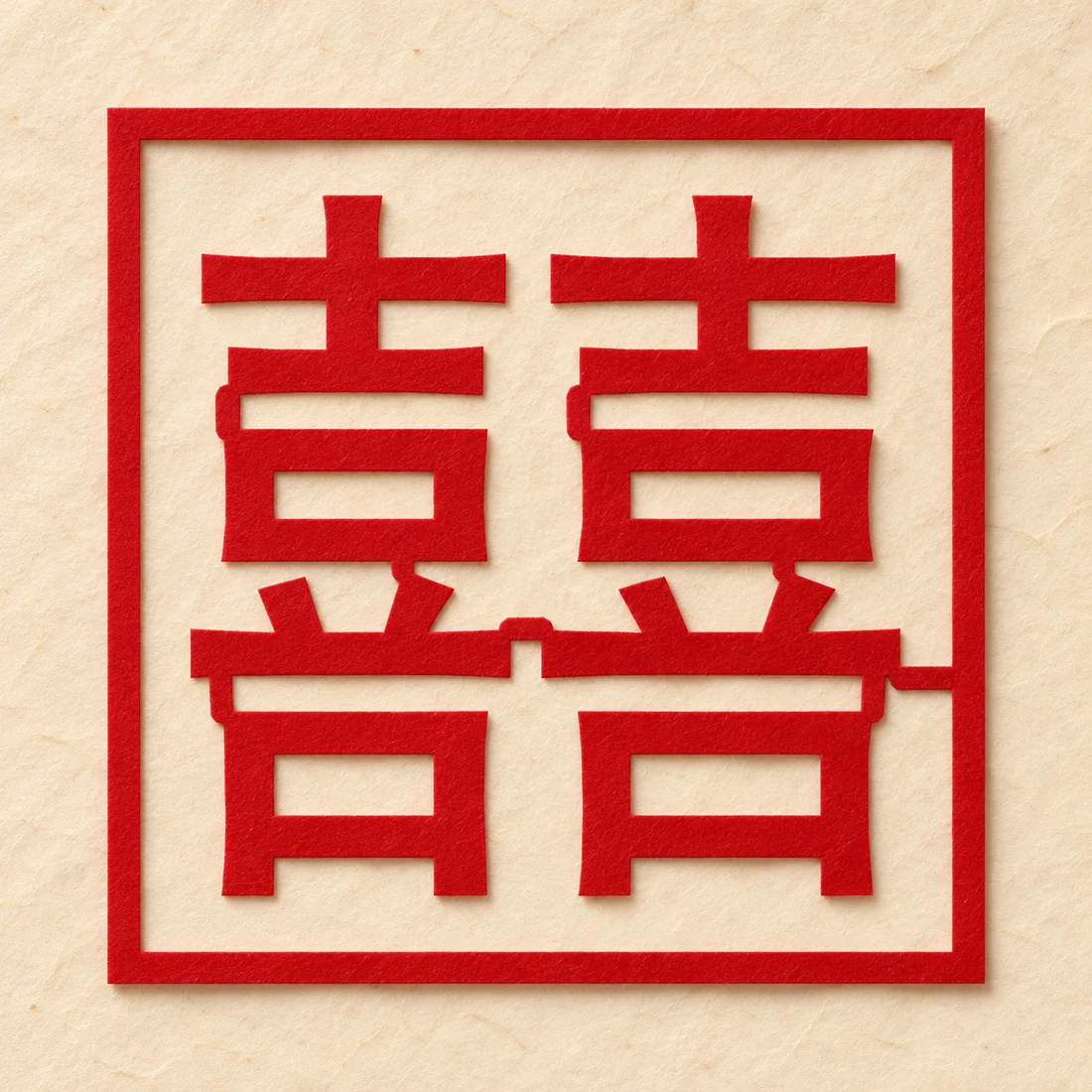
Double Happiness commonly appears in wedding papercuts. This teaching design places 囍 in a square, window-like frame as an original interpretation of the motif.
The character 寿 conveys wishes for a long life. This original teaching adaptation puts the simplified character in an oval frame with leaves at the sides.
 Advanced